


How Flexible Electronics and AI, are Shaping the Next Wave of Strategic Partnerships in Emerging Technologies (II/II)
These partnerships, despite facing technical, economic, regulatory, and cultural challenges, are essential for overcoming the complexities of integrating these emerging technologies. Successful collaborations hinge on shared goals, innovative research models, and robust ecosystems, which are crucial for unlocking the full potential of flexible electronics and AI in creating groundbreaking applications across sectors such as healthcare, agriculture, and environmental monitoring.

Introduction
We continue exploring the impact of the AI and flexible electronics by addressing some of the challenges and opportunities associated with forming strategic partnerships in this rapidly evolving field, highlighting technical, economic, regulatory, and organizational hurdles. We outline strategies for fostering successful collaborations, emphasizing the importance of collaborative R&D models, open innovation ecosystems, and ecosystem partnerships in unlocking the potential of these cutting-edge technologies.
Challenges in Forming Strategic Partnerships
The convergence of flexible electronics and artificial intelligence (AI) is ushering in a new era of technological innovation, prompting companies to forge strategic partnerships to capitalize on these emerging opportunities. As these technologies continue to evolve, they are reshaping industries ranging from healthcare to manufacturing, creating a landscape ripe for collaboration and innovation1,3.
Flexible electronics, with their ability to conform to various shapes and surfaces, are opening up new possibilities in areas such as wearable devices, environmental sensors, and robotics3. When combined with AI, these technologies have the potential to revolutionize how we interact with our environment and process information. This synergy is driving companies to seek out partnerships that can help them navigate the complex technical and market challenges associated with bringing these innovations to fruition.
However, forming and maintaining successful strategic partnerships in this rapidly evolving field is not without its challenges. Companies face a myriad of technical, economic, regulatory, and cultural hurdles that must be overcome to fully realize the potential of these collaborations.
Technical Challenges
One of the primary technical challenges in forming strategic partnerships around flexible electronics and AI is the integration of these two complex technologies. Flexible electronics require specialized materials and manufacturing processes, while AI systems demand significant computational power and sophisticated algorithms. Combining these technologies in a way that maintains the flexibility of the electronics while leveraging the full capabilities of AI is a significant engineering challenge3,6.
Another major hurdle is the standardization of data formats and ensuring compatibility between different systems. As flexible electronics generate vast amounts of data from various sensors, partners must work together to establish common protocols and interfaces that allow for seamless data exchange and processing. This challenge is compounded by the rapid pace of technological advancement, which can quickly render existing standards obsolete5.
Economic and Regulatory Hurdles
The economic landscape for partnerships in flexible electronics and AI is characterized by high research and development costs. Companies must invest heavily in cutting-edge materials, manufacturing processes, and AI algorithms, often with uncertain returns on investment. This financial pressure can strain partnerships, especially when partners have different risk tolerances or investment capabilities8.
Intellectual property concerns also present significant challenges. As companies collaborate on innovative technologies, determining ownership and rights to jointly developed IP can become a contentious issue. Partners must navigate complex legal agreements to protect their interests while still fostering an environment of open innovation8.
Regulatory compliance adds another layer of complexity, particularly for applications in sensitive areas such as medical devices and consumer products. Partners must work together to ensure their technologies meet stringent safety and privacy standards, which can vary significantly across different markets and jurisdictions. The evolving nature of regulations surrounding AI and data privacy further complicates this landscape, requiring partners to remain agile and responsive to changing legal requirements4.
Cultural and Organizational Barriers
Perhaps the most insidious challenges in forming strategic partnerships are the cultural and organizational barriers that can impede collaboration. Mismatched goals and timelines among partners can lead to friction and misalignment. For example, a startup focused on rapid innovation may struggle to work with a large corporation that has longer development cycles and more bureaucratic processes5,8.
Different organizational cultures can also clash when it comes to decision-making processes, risk tolerance, and communication styles. These differences can be particularly pronounced in international partnerships, where cultural norms and business practices may vary significantly5.
Moreover, the fast-paced nature of technological advancement in flexible electronics and AI can create challenges in maintaining long-term partnerships. As new technologies emerge, partners may find their strategic interests diverging, requiring constant reevaluation and realignment of partnership goals2.
Despite these challenges, the potential benefits of strategic partnerships in flexible electronics and AI continue to drive collaboration in the industry. Successful partnerships are characterized by clear communication, aligned incentives, and a shared vision for the future of these technologies. Companies that can navigate these hurdles stand to gain significant competitive advantages in the rapidly evolving landscape of emerging technologies1,2.
As the field continues to mature, we can expect to see new models of collaboration emerge, designed to address the unique challenges posed by the intersection of flexible electronics and AI. These partnerships will likely involve a diverse ecosystem of players, including technology companies, research institutions, and regulatory bodies, all working together to unlock the full potential of these transformative technologies7.
Strategic Partnerships in Flexible Electronics and AI
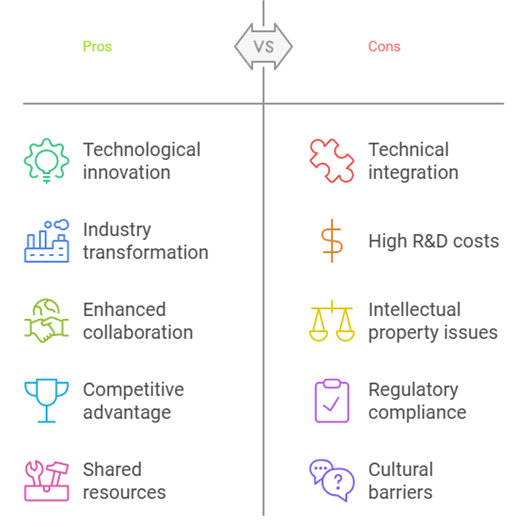
Figure 3. The convergence of flexible electronics and artificial intelligence (AI) presents transformative opportunities across industries, but achieving their full potential requires overcoming significant technical, economic, regulatory, and cultural challenges through strategic and collaborative partnerships
Strategies for Successful Partnerships
The convergence of flexible electronics and artificial intelligence (AI) is catalyzing a new era of strategic partnerships in emerging technologies. These collaborations are reshaping industries and driving innovation at an unprecedented pace. To fully capitalize on the potential of these technologies, companies are adopting novel strategies for successful partnerships that address the unique challenges and opportunities presented by this rapidly evolving landscape.
Collaborative R&D Models
One of the most effective strategies for successful partnerships in the flexible electronics and AI space is the establishment of collaborative research and development (R&D) models. These models are designed to foster innovation by bringing together diverse expertise and resources from multiple organizations.
A prime example of this approach is the creation of joint innovation hubs. These hubs serve as centralized locations where partners can pool their resources, share knowledge, and work together on cutting-edge projects. By co-locating researchers and engineers from different organizations, these hubs facilitate rapid prototyping, iterative development, and cross-pollination of ideas9.
Research consortiums focused on advancing AI-flexible electronics represent another powerful collaborative R&D model. These consortiums often bring together industry leaders, academic institutions, and government agencies to tackle complex challenges that no single entity could address alone. For instance, a consortium might focus on developing new materials that enhance the performance of flexible AI-enabled sensors or creating standardized protocols for integrating AI algorithms with flexible electronic systems.
Leveraging Open Innovation Ecosystems
To accelerate innovation and tap into a broader pool of talent and ideas, many companies are leveraging open innovation ecosystems. This approach involves engaging with startups, academic institutions, and other external partners through incubators and accelerators10.
Incubators and accelerators focused on flexible electronics and AI provide a structured environment for nurturing early-stage ideas and companies. These programs often offer mentorship, funding, and access to specialized equipment and facilities. By participating in or sponsoring such initiatives, established companies can gain early access to promising technologies and talent while also fostering a culture of innovation within their own organizations.
Engaging with academia through research partnerships and sponsored projects is another crucial aspect of open innovation in this field. Universities are often at the forefront of fundamental research in both flexible electronics and AI. By collaborating with academic institutions, companies can bridge the gap between theoretical advancements and practical applications, while also cultivating a pipeline of skilled talent for future recruitment.
Building Ecosystem Partnerships
The complex nature of integrating flexible electronics with AI systems necessitates the formation of broad ecosystem partnerships. These partnerships bring together multiple players across the value chain, including hardware manufacturers, software developers, cloud service providers, and end-users11.
An exemplary model of ecosystem partnership is the development of AI and flexible electronics platforms that integrate contributions from various stakeholders. For instance, a platform might combine flexible sensor technologies from one partner, AI algorithms from another, cloud computing resources from a third, and application-specific expertise from end-user industries. This collaborative approach allows each partner to focus on their core competencies while benefiting from the collective strengths of the ecosystem.
These platforms can serve as the foundation for a wide range of applications, from wearable health monitoring devices to smart manufacturing systems. By creating a standardized infrastructure for integrating flexible electronics with AI capabilities, such platforms can significantly reduce development time and costs for new products and services.
Ensuring Regulatory and IP Alignment
As partnerships in flexible electronics and AI become more complex and involve multiple stakeholders, ensuring regulatory compliance and intellectual property (IP) alignment becomes increasingly critical. Successful partnerships in this space require carefully crafted agreements and best practices for IP sharing and regulatory compliance12.
Best practices for IP sharing in these partnerships often include:
- Clearly defined ownership and usage rights for jointly developed technologies
- Mechanisms for fair compensation and recognition of contributions from all partners
- Protocols for protecting confidential information while still enabling collaboration
Regulatory compliance is another crucial aspect of successful partnerships, particularly given the sensitive nature of AI technologies and the potential applications of flexible electronics in areas like healthcare and consumer products. Best practices in this area include:
- Establishing joint compliance teams with representatives from all partners
- Regular audits and assessments to ensure adherence to relevant regulations
- Proactive engagement with regulatory bodies to help shape future guidelines
By addressing these IP and regulatory concerns upfront, partnerships can avoid potential conflicts and focus on innovation and value creation.
In all, the intersection of flexible electronics and AI is driving a new wave of strategic partnerships that are reshaping the technological landscape. By adopting collaborative R&D models, leveraging open innovation ecosystems, building comprehensive ecosystem partnerships, and ensuring regulatory and IP alignment, companies can position themselves at the forefront of this exciting field. As these technologies continue to evolve, the partnerships formed today will play a crucial role in shaping the products and services of tomorrow, driving economic growth and addressing global challenges across multiple industries.
Navigating Successful Strategic Partnerships
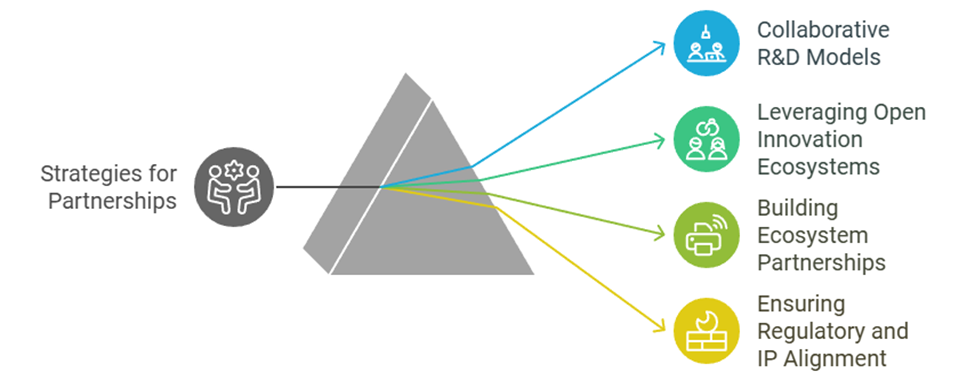
Figure 4. Strategic partnerships in flexible electronics and AI thrive through collaborative R&D models, open innovation ecosystems, and ecosystem-wide cooperation, addressing regulatory and IP challenges to drive transformative innovation and reshape industries.
The Future of Flexible Electronics and AI in Partnerships
The convergence of flexible electronics and artificial intelligence (AI) is ushering in a new era of technological innovation, reshaping industries and driving the formation of strategic partnerships across various sectors. As we look to the future, the potential for these technologies to revolutionize our world becomes increasingly apparent, with advancements in material science, AI algorithms, and cross-sector collaborations paving the way for groundbreaking applications and ecosystem-wide transformations.
Technological Evolution
The future of flexible electronics and AI partnerships is intrinsically linked to ongoing advancements in material science and AI algorithms. Researchers and companies are continuously pushing the boundaries of what’s possible, developing new materials that enhance the performance, durability, and flexibility of electronic components. These innovations are enabling the creation of more sophisticated and versatile flexible electronic devices that can seamlessly integrate with AI systems.
One exciting area of development is in flexible photonic sensors integrated with AI for precision agriculture. These advanced systems combine the power of flexible electronics with cutting-edge AI algorithms to revolutionize farming practices. For instance, flexible sensors can be deployed across vast agricultural lands to collect real-time data on soil conditions, crop health, and environmental factors. AI algorithms then process this data to provide farmers with actionable insights, enabling more precise and efficient resource management16.
The integration of AI with flexible electronics is also driving innovations in wearable technology and the Internet of Things (IoT). As AI algorithms become more sophisticated, they can better interpret the complex data gathered by flexible sensors, leading to more accurate and personalized insights. This synergy is particularly evident in health monitoring devices, where AI can analyze data from flexible sensors to detect subtle changes in physiological markers, potentially predicting health issues before they become serious17.
Expanding Applications
The fusion of flexible electronics and AI is opening up new possibilities across a wide range of industries, with emerging applications in smart textiles, implantable medical devices, and AI-driven environmental sensors. These innovations are not only enhancing existing products but also creating entirely new categories of devices that were previously unimaginable.
In the realm of smart textiles, flexible electronics and AI are enabling the development of clothing that can adapt to environmental conditions, monitor vital signs, and even change color or pattern on demand. These advanced textiles have applications ranging from sports and fitness to healthcare and military use. For example, smart uniforms equipped with flexible sensors and AI processing capabilities could monitor soldiers’ health status and environmental conditions in real-time, enhancing safety and operational effectiveness14.
Implantable medical devices represent another frontier for flexible electronics and AI. The ability to create flexible, biocompatible electronic components allows for the development of devices that can conform to the contours of the human body, reducing discomfort and improving functionality. When combined with AI, these implants can provide continuous monitoring and adaptive treatment, potentially revolutionizing the management of chronic conditions such as diabetes or heart disease17.
AI-driven environmental sensors leveraging flexible electronics are poised to transform our understanding and management of the natural world. These sensors can be deployed in challenging environments, from dense forests to ocean depths, collecting data on various ecological parameters. AI algorithms can then analyze this data to predict environmental changes, monitor wildlife populations, or detect pollution levels with unprecedented accuracy16.
Strengthening Ecosystem Collaborations
The future of flexible electronics and AI partnerships lies in strengthening collaborations across the entire ecosystem, including government, industry, and academia. These multi-faceted partnerships are crucial for driving innovation, addressing complex challenges, and accelerating the development and adoption of new technologies.
Government involvement is essential in creating a supportive regulatory environment and providing funding for research and development. Initiatives like the CHIPS Act in the United States demonstrate the potential for government support to catalyze growth in the semiconductor industry, which is fundamental to the advancement of flexible electronics18. Similar programs focused on flexible electronics and AI could significantly accelerate progress in these fields.
Industry partnerships are vital for translating research into commercial products and scaling up production. Companies across different sectors are increasingly recognizing the value of collaboration in addressing the complex challenges posed by flexible electronics and AI integration. For instance, partnerships between electronics manufacturers, AI software companies, and end-user industries can lead to more targeted and effective solutions13.
Academic institutions play a crucial role in conducting fundamental research and training the next generation of engineers and scientists. Universities are often at the forefront of innovations in both flexible electronics and AI. By fostering closer ties between academia and industry, we can ensure that cutting-edge research is quickly translated into practical applications18.
The future of flexible electronics and AI partnerships will likely see the emergence of innovation hubs and consortiums that bring together diverse stakeholders. These collaborative spaces can facilitate knowledge sharing, pooling of resources, and cross-pollination of ideas. For example, the Arizona State University’s Flexible Electronics & Display Center demonstrates how such partnerships can drive technological advancements and economic growth15.
As we move forward, the synergy between flexible electronics and AI will continue to drive technological innovation and reshape industries. The partnerships formed today will play a crucial role in determining the trajectory of these technologies, potentially leading to breakthroughs that could address some of the world’s most pressing challenges, from healthcare to environmental sustainability. By fostering a collaborative ecosystem that spans government, industry, and academia, we can unlock the full potential of flexible electronics and AI, ushering in a new era of technological advancement and societal progress.
Future of Flexible Electronics and AI in Partnerships
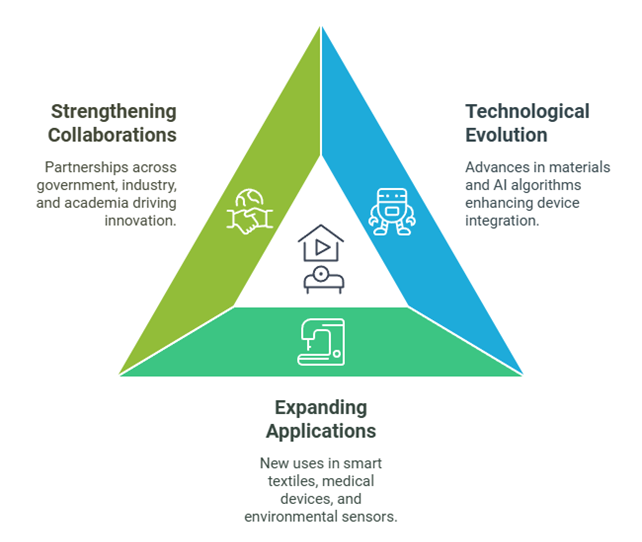
Figure 5. The future of flexible electronics and AI lies in fostering cross-sector collaborations, leveraging advancements in material science and AI algorithms, and building a robust ecosystem involving government, industry, and academia to drive innovation, create groundbreaking applications, and address global challenges.
Takeaway
We emphasized the transformative potential of flexible electronics and artificial intelligence (AI) as key drivers of innovation and strategic collaboration in emerging technologies. They illustrate how the synergy between these fields is enabling advancements across diverse sectors such as healthcare, consumer electronics, automotive, energy, and robotics. Strategic partnerships are highlighted as essential to overcoming technical, economic, regulatory, and cultural challenges, facilitating innovation through shared expertise, collaborative R&D models, and ecosystem partnerships.
Key insights include the necessity of robust collaboration to manage the complexities of integrating flexible electronics with AI, the critical role of regulatory and IP alignment, and the opportunities provided by leveraging open innovation ecosystems. Successful partnerships require alignment on goals, proactive handling of challenges, and an ecosystem-wide approach involving academia, industry, and government.
Ultimately, one can project a future where the convergence of flexible electronics and AI not only reshapes industries but also redefines human interaction with technology, creating intelligent, adaptive solutions that address global challenges and redefine the boundaries of innovation.