


Investment Strategies in Emerging Biosensor Technologies (III/IV)
Strategic partnerships, including collaborations with academic, industry, and government entities, are essential for advancing biosensor technologies and driving commercialization. Additionally, successful investment strategies require a focus on platform technologies, capital efficiency, AI integration, and clear regulatory paths, alongside diversified funding sources and a well-defined market entry strategy. These elements can significantly enhance innovation, accelerate development, and increase the chances of success in the rapidly growing biosensor market

Continuing with the third part of this series, we explore investment strategies for emerging biosensor technologies, highlighting the importance of strategic partnerships, innovative funding models, and regulatory considerations. Part three also provides insights into key market trends, technological advancements, and effective go-to-market strategies to guide investors and entrepreneurs in capitalizing on growth opportunities in the rapidly evolving biosensor sector.
Strategic Partnerships and Collaborations
In the rapidly evolving field of biosensor technologies, strategic partnerships and collaborations have become crucial for driving innovation, accelerating development, and maximizing return on investment. These alliances span across academic institutions, industry players, and government organizations, creating a robust ecosystem that fosters groundbreaking advancements in biosensor technology.
Academic and Research Institutions
Investing in partnerships with academic and research institutions is a key strategy for companies looking to stay at the forefront of biosensor technology. These collaborations often involve funding R&D projects, which can lead to breakthrough discoveries and novel applications. For instance, the BEST Centre at La Trobe University brings together experts from various fields to advance biosensor development, emphasizing community engagement and translational research2. This multidisciplinary approach is particularly valuable in addressing real-world challenges and creating biosensors that can be rapidly deployed in remote or resource-limited areas.
Licensing agreements with academic institutions provide another avenue for companies to access cutting-edge technologies. These agreements allow businesses to commercialize innovations developed in academic settings, bridging the gap between research and market-ready products. The partnership between GrapheneDx, General Graphene Corp, and Sapphiros exemplifies this approach, as they work together to industrialize graphene-based biosensors for point-of-care and consumer diagnostics4.
Industry Collaborations
Partnerships between biosensor companies and established med-tech giants or pharmaceutical firms can significantly accelerate product development and market penetration. These collaborations often involve co-development of integrated systems, such as incorporating biosensors into drug delivery platforms. For example, Biolinq’s recent $58 million financing round, led by Alpha Wave Ventures and including participation from various industry players, demonstrates the potential of such partnerships in advancing wearable biosensor technology1.
Industry collaborations can also lead to the development of more comprehensive health monitoring solutions. Biolinq’s wearable patch, which combines glucose monitoring with activity tracking, illustrates how partnerships can result in multifunctional devices that address broader health management needs1. Such integrated solutions are likely to become increasingly valuable in the growing market for personalized healthcare and remote patient monitoring.
Government and Non-Profit Organizations
Leveraging public funding and participating in public-private partnerships (PPPs) are essential strategies for biosensor companies, particularly those working on technologies with potential applications in public health or national security. The Air Force Research Laboratory’s collaboration with NextFlex and Profusa, Inc. to advance wearable remote human performance monitoring technology is a prime example of how government partnerships can drive innovation in biosensor development7.
These partnerships not only provide access to funding but also offer valuable resources and expertise. For instance, the National Science Foundation’s $1.5 million grant to Penn State researchers for AI-designed biosensor development demonstrates how public funding can catalyze cutting-edge research in the field5. Such initiatives often focus on addressing critical challenges, such as improving biosensor performance, reducing costs, or expanding applications to new areas.
Investment Landscape and Market Trends
The biosensor market is experiencing rapid growth, with projections indicating an increase from $19.69 billion in 2020 to $37.51 billion by 2025, representing a CAGR of 13.8%3. This growth is driven by factors such as increasing demand for point-of-care diagnostics, advancements in nanotechnology, and the rising prevalence of chronic diseases.
Investors should consider the diverse applications of biosensor technologies when developing their investment strategies. While glucose monitoring remains a significant segment, accounting for 25.47% of total biosensor revenue in 2020, there are emerging opportunities in areas such as environmental monitoring, food safety, and biodefense3.
Strategic Partnerships in Biosensor technologies
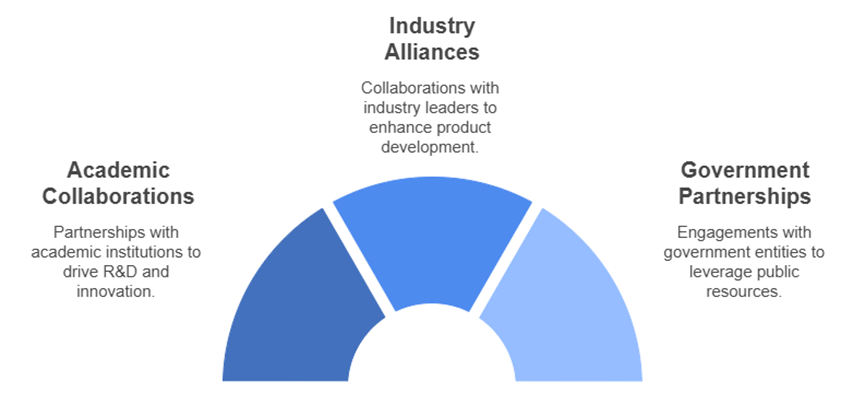
Figure 8. Strategic partnerships across academic, industry, and government sectors are essential for advancing biosensor technologies, fostering innovation, and driving market growth.
Technological Advancements and R&D Focus
Successful investment in biosensor technologies requires a keen understanding of the latest technological advancements and research trends. Key areas of focus include:
- Miniaturization and microfabrication technologies
- Novel bio-recognition molecules
- Nanomaterials and nanostructured devices
- Integration of artificial intelligence and machine learning
Companies like Allez Health are making significant strides in these areas, developing novel sensor technologies that aim to transform cost barriers while enhancing performance and user experience6.
Regulatory Considerations and Market Entry Strategies
Investors must also consider the regulatory landscape when evaluating biosensor technologies. The path to market often involves clinical trials and regulatory approvals, which can be time-consuming and costly. For example, Biolinq’s recent funding will support the completion of a U.S. pivotal clinical trial and subsequent FDA submission for their intradermal glucose sensor1.
Developing a clear regulatory strategy and allocating resources for clinical trials and approval processes is crucial for successful commercialization. Companies that can navigate these challenges effectively are likely to gain a competitive edge in the market.
In all, investment strategies in emerging biosensor technologies should focus on fostering strategic partnerships across academia, industry, and government sectors. These collaborations can accelerate innovation, reduce development costs, and increase the likelihood of commercial success. By carefully considering market trends, technological advancements, and regulatory requirements, investors can position themselves to capitalize on the significant growth opportunities in this dynamic field.
Financial and Marketing Strategies
The biosensor market is experiencing rapid growth, with projections indicating an increase from $28.9 billion in 2023 to $36.7 billion by 2026, representing a compound annual growth rate (CAGR) of 8.0%12,13. This growth presents significant opportunities for investors and entrepreneurs in the biosensor technology sector. To capitalize on these opportunities, it is crucial to develop robust financial and marketing strategies that align with the unique challenges and potential of this emerging field.
Investment Models
Venture capital (VC) and private equity (PE) play a crucial role in financing biosensor startups and emerging technologies. These investment models provide not only capital but also expertise and networks that can accelerate the development and commercialization of innovative biosensor technologies10. For instance, in 2015, Biosensors International, a Singapore-based device maker, was acquired by the private equity arm of China’s Citic Group for $787 million, demonstrating the significant interest and potential for high-value exits in this sector8.
Corporate venture arms and strategic investments are becoming increasingly important in the biosensor industry. Established companies in the healthcare, technology, and pharmaceutical sectors are actively seeking partnerships and investment opportunities with promising biosensor startups. These strategic investments can provide startups with access to resources, distribution channels, and industry expertise that can significantly accelerate their growth and market penetration10.
Crowdfunding and public-private co-investments are emerging as alternative funding sources for biosensor technologies. These models can be particularly effective for early-stage projects or those with strong social impact potential. Public-private partnerships (PPPs) can leverage government funding and resources to support the development of biosensor technologies that address critical public health or environmental challenges10.
Biosensor Funding Models and Strategic Importance
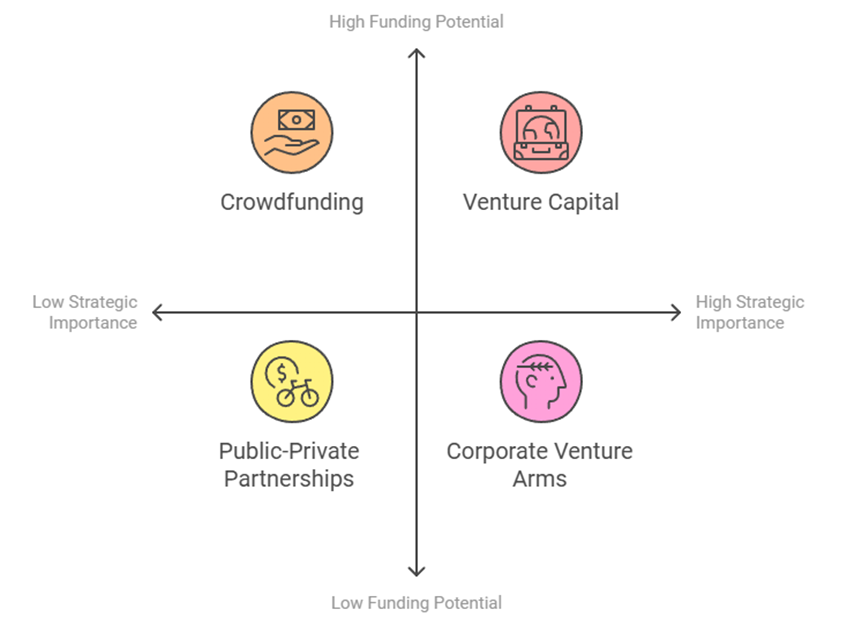
Figure 9. Successful investment in biosensor technologies requires understanding technological advancements, regulatory challenges, and effective financial and market strategies, while fostering strategic partnerships to accelerate innovation and commercialization.
Common Venture Capital Strategies for Funding Biosensor Startups
Effective venture capital strategies for funding biosensor startups involve a multi-faceted approach that capitalizes on the unique aspects of this emerging technology sector. Here are some of the most effective strategies:
Focus on Platform Technologies
Investors are increasingly drawn to biosensor startups that develop platform technologies rather than single-use applications. Platform technologies offer greater versatility and potential for multiple revenue streams. From 2019 to 2021, two-thirds of the $52 billion invested globally by VC companies into therapeutic-based biotech firms went to startups with platform technologies19. This trend is likely to continue in the biosensor space, as platforms can be adapted for various applications in healthcare, environmental monitoring, and other fields.
Prioritize Capital Efficiency
Given the current funding landscape, biosensor startups need to demonstrate capital efficiency to attract investors. This involves:
- Carefully managing resources to extend runway
- Focusing on key milestones that demonstrate value
- Developing clear go-to-market strategies
Startups that can show they can achieve significant progress with limited resources are more likely to secure funding, especially in the current climate where investors are becoming more cautious with later-stage investments20.
Leverage AI and Machine Learning
Incorporating artificial intelligence and machine learning into biosensor technologies can be a significant draw for investors. AI’s ability to process vast amounts of data and identify patterns has opened new avenues for biotech innovation, including in biosensor development20.
Startups that can demonstrate how they’re using AI to enhance their biosensor technology, improve accuracy, or expand applications are likely to attract more investor interest.
Diversify Funding Sources
Successful biosensor startups often diversify their funding sources beyond traditional venture capital. This may include:
- Corporate venture arms
- Strategic partnerships with established companies
- Government grants and public-private partnerships
- Crowdfunding (for early-stage projects)
Diversification not only increases the chances of securing funding but also brings in different types of expertise and resources that can accelerate development and commercialization20.
Target Precision Medicine Applications
Biosensor technologies that enable or enhance precision medicine applications are particularly attractive to investors. The ability to create customized treatments with minimal side effects is a complex but highly valuable endeavor19. Biosensor startups focusing on technologies that can demonstrate substantially better outcomes through real clinical data are likely to attract significant investor interest.
Demonstrate Clear Regulatory Strategy
Given the regulatory challenges in the biosensor field, especially for medical applications, startups that can demonstrate a clear understanding of the regulatory landscape and a strategy for navigating it are more likely to secure funding. This includes having a well-defined path to clinical trials and regulatory approvals21.
By adopting these strategies, biosensor startups can position themselves more effectively to secure venture capital funding and navigate the challenges of bringing innovative technologies to market.
Optimizing Funding Strategies for Biosensor Startups
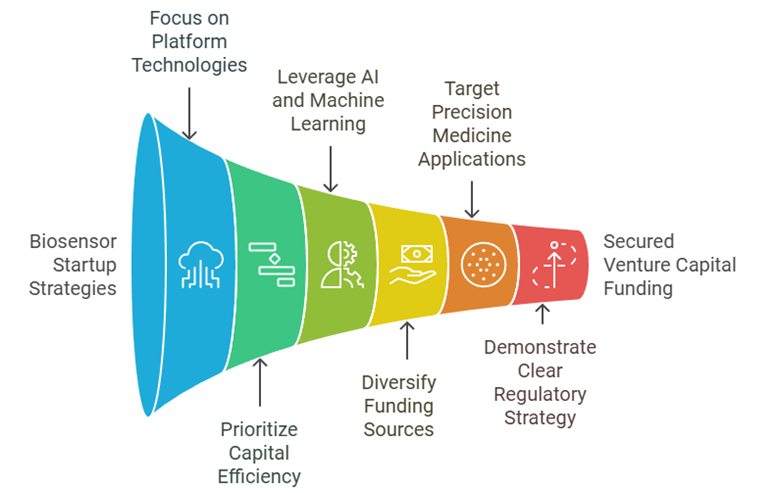
Figure 10. Biosensor startups can attract venture capital by focusing on platform technologies, capital efficiency, AI integration, diversified funding sources, precision medicine, and a clear regulatory strategy.
Venture Capital vs. Corporate Venture Capital
Corporate venture arms play a distinct role in biosensor investments compared to traditional venture capital firms. These strategic investors, often affiliated with established companies in healthcare, technology, or pharmaceuticals, bring unique advantages to biosensor startups beyond just capital.
Corporate venture arms typically offer access to industry expertise, established distribution channels, and potential partnership opportunities that can significantly accelerate a biosensor startup’s growth and market penetration. For example, Hikma Ventures, the corporate venture arm of Hikma Pharmaceuticals, invested in Biolinq, demonstrating how these arms can provide strategic value in addition to funding16. Similarly, Dexcom Ventures, built upon Dexcom’s expertise in diabetes care technology, seeks to invest in transformative technologies adjacent to their core business, leveraging their industry knowledge to drive innovation18.
Unlike traditional venture capital firms that may focus primarily on financial returns, corporate venture arms often have strategic objectives aligned with their parent company’s interests. This can lead to more patient capital and a longer-term perspective on investment returns. For instance, Niterra’s corporate venture capital fund, jointly operated with Pegasus Tech Ventures, participated in Biolinq’s recent $58 million financing round, showcasing how these arms can collaborate with traditional investors to support biosensor technologies15,17.
Corporate venture arms may also provide biosensor startups with valuable resources such as research and development facilities, regulatory expertise, and manufacturing capabilities. This can be particularly beneficial in the biosensor industry, where navigating regulatory requirements and scaling production can be challenging for startups. The involvement of corporate venture arms can thus significantly de-risk the development and commercialization process for emerging biosensor technologies.
Comparing Investment Strategies for Biosensor Startups
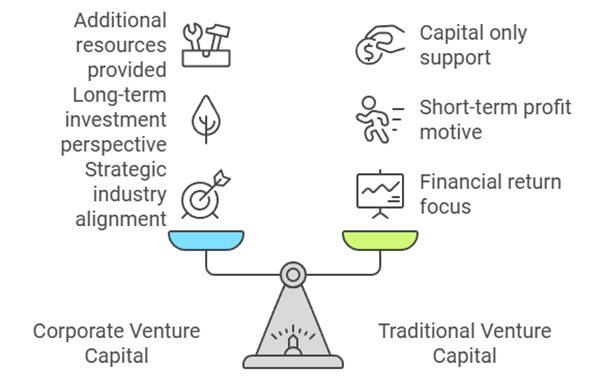
Figure 11. Corporate venture arms offer biosensor startups not only capital but also strategic advantages such as industry expertise, distribution channels, and long-term support, which can accelerate growth and reduce risks in development and commercialization.
Marketing and Commercialization
Developing effective go-to-market strategies is crucial for biosensor startups to successfully transition from research and development to commercial success. A comprehensive approach should consider factors such as target market identification, regulatory requirements, pricing strategies, and distribution channels11.
For example, Intricon’s launch of a Biosensors Center of Excellence demonstrates a strategic move to integrate expertise and capabilities for introducing biosensor devices to the medical market12.
Building brand awareness for emerging biosensor technologies requires a multifaceted approach. This may include participating in industry conferences, publishing research findings, engaging with key opinion leaders, and leveraging digital marketing channels to showcase the unique value proposition of the technology. It’s important to tailor the messaging to different stakeholders, including potential customers, investors, and regulatory bodies9.
Monetization strategies for biosensor technologies can vary depending on the specific technology and market dynamics. Licensing agreements with established companies can provide a steady revenue stream and accelerate market penetration. Partnerships with larger firms can offer access to manufacturing capabilities and distribution networks. Acquisitions by larger companies are also common in this sector, as demonstrated by the Biosensors International deal8,9.
Key Considerations for Investors and Entrepreneurs
When evaluating investment opportunities in biosensor technologies, it’s crucial to consider several factors:
Market potential: Assess the size and growth prospects of the target market. For instance, the medical segment dominated the biosensor industry in 2023, accounting for 66.8% of the total revenue share12.
Technological differentiation: Evaluate the uniqueness and patentability of the biosensor technology. Intellectual property protection can be a significant barrier to entry and value driver14.
Regulatory landscape: Understand the regulatory requirements for the specific application and target markets. This is particularly important in medical applications, where regulatory approval processes can be lengthy and costly9.
Team expertise: Assess the experience and capabilities of the management team, as this is often a critical factor in attracting investment and successfully commercializing the technology9.
Scalability and manufacturing: Consider the potential for scaling production and the associated costs. Partnerships with established manufacturers can be valuable in this regard9.
Competitive landscape: Analyze the existing and potential competitors in the space, including both established players and other emerging technologies9.
The biosensor technology sector offers significant investment opportunities, driven by technological advancements and growing market demand. Success in this field requires a strategic approach to both financial and marketing aspects, leveraging a combination of investment models and go-to-market strategies tailored to the unique characteristics of biosensor technologies. By carefully considering these factors and developing comprehensive strategies, investors and entrepreneurs can position themselves to capitalize on the exciting growth potential of the biosensor market.
Strategic Framework for Biosensor Startup Investors and Entrepreneurs
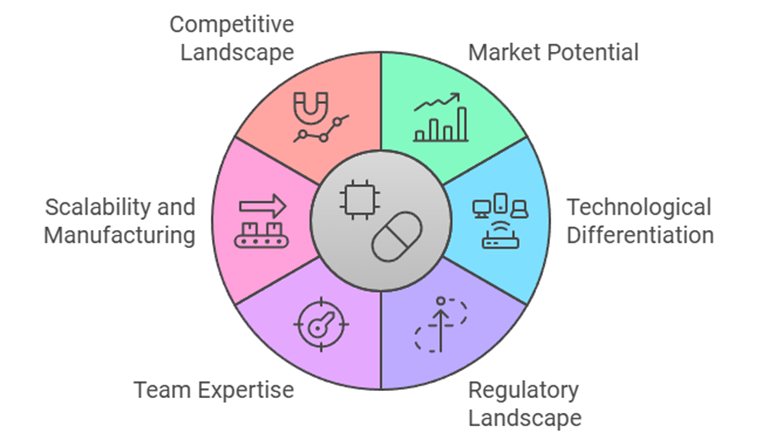
Figure 12. Successful commercialization and investment in biosensor technologies require strategic go-to-market plans, careful market evaluation, and leveraging key partnerships, regulatory understanding, and scalability.