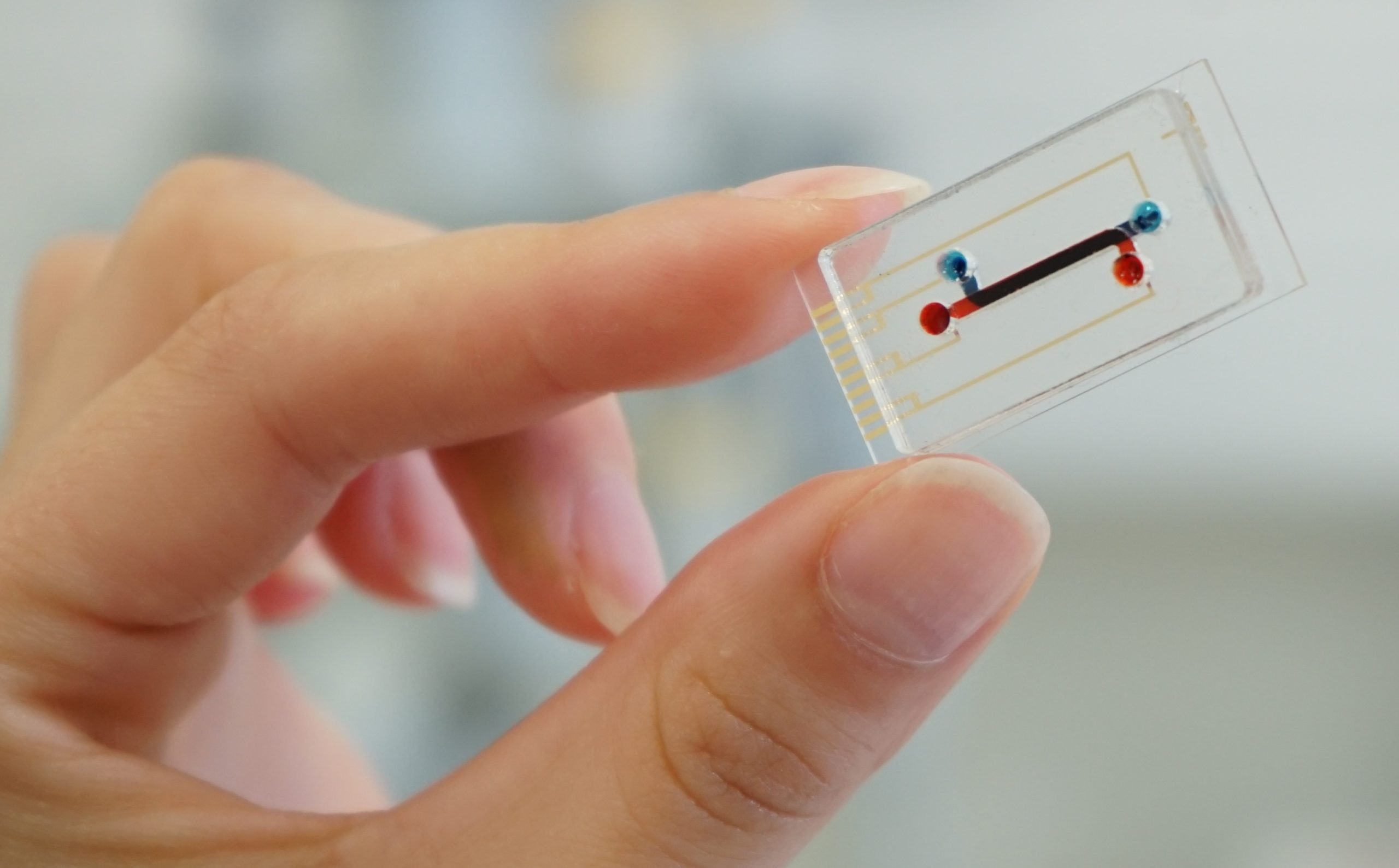

An enzyme-free glucose-monitoring prototype uses electrical pulses to create the conditions its electrode needs. Its commercial case depends on whether a reusable cartridge can deliver reliable readings without adding too much delay, maintenance or complexity.
MEMSWork Intelligence Dashboard
| Field | Current assessment |
|---|---|
| Market status | Continuous glucose monitoring is commercial. The regenerable microneedle approach is at research stage [1,3,4]. |
| Primary constraint | Repeatable fluid extraction and stable sensing across the complete wear and reuse cycle. |
| Demand driver | Longer usable sensor life and fewer sensor changes, provided accuracy and data availability hold. |
| Time horizon | Near-term bench and feasibility work. Commercial timing is uncertain. |
| Technologies to watch | Hollow microneedles, detachable fluidics, pH feedback and electrode regeneration. |
| Strategic signal | The cartridge and sampling interface could matter as much as the catalyst. |
| Next trigger | Paired reference measurements and cartridge survival data across repeated use. |
What changed in nonenzymatic glucose sensing
On October 16, 2026, Nature Communications published an early version of peer-reviewed research by Zeng and colleagues on a wrist-worn glucose-monitoring prototype. The team used hollow microneedles and negative pressure to pull interstitial fluid into a detachable cartridge. The cartridge houses a metal catalyst and allows the sensing chamber to be rinsed and reused. The authors report quasi-continuous measurements in rats and preliminary feasibility in one human participant [1].
The design addresses a mismatch. Many nonenzymatic glucose electrodes favor an alkaline environment, while interstitial fluid is near neutral. The prototype uses a brief cathodic pulse at a gold–platinum electrode on nickel foam to drive hydrogen evolution and generate hydroxide locally. A subsequent step oxidizes glucose and provides the measurement signal. A pH feedback loop regulates the electrochemical sequence. The loop controls reaction conditions inside the cartridge. Insulin delivery is outside its scope [1].
This architecture gives developers a way to operate alkaline-dependent chemistry on a near-neutral sample. It also changes what has to be qualified. An electrode can respond consistently when a sample is presented under controlled conditions even if the wearable struggles to collect fresh fluid, reset the chamber or provide a usable reading at the right time. The product question is whether those functions can work together throughout wear.
Separate the chemistry from the measurement chain
A useful test starts by assigning delay and variation to the stage that produces them. Glucose reaches interstitial fluid after transport from blood. A human tracer study in healthy adults under overnight fasting conditions measured a mean tracer-appearance lag of 5.3–6.2 minutes after accounting for the measurement setup. A separate study in adults with type 1 diabetes also found a measurable lag under fasting conditions. These experiments characterize physiological transport in their respective protocols. Neither establishes the total response time of a cartridge-based monitor during everyday use [2,6].
The new architecture adds sample extraction, transit through the fluid path, local pH conditioning and an oxidation measurement. Fluid left from an earlier cycle could carry a stale signal into a new reading. Variable sample volumes could change the time needed to reach the target electrode conditions. Gas formation, which follows from the hydrogen-evolution step, warrants a test for interruptions to flow or changes in effective electrode area. These are engineering failure modes to investigate in the assembled device, not outcomes quantified by the preliminary human demonstration [1].
Regeneration deserves its own endpoint. A rinse can remove some accumulated material while leaving electrode drift, reference-electrode changes or carryover unresolved. A convincing cycle-life test would follow the same cartridges over repeated use and compare them with fresh controls. Reporting the recovery of baseline, sensitivity and sampling rate separately would show whether the procedure restores measurement quality or simply keeps the device producing readings.
| Qualification gate | What the evidence establishes | Evidence that would advance diligence |
|---|---|---|
| Local chemistry | Zeng and colleagues demonstrated electrochemical pH conditioning and subsequent glucose oxidation in a research platform [1]. | Measure baseline and sensitivity recovery after repeated exposure to realistic sample matrices and interferents. |
| Sample timing | Tracer studies establish physiological transport delay under specified fasting conditions [2,6]. | Separate extraction, channel transit, conditioning and algorithm delay. Measure failures and carryover during dynamic changes. |
| Clinical wear | FDA documents and the ENHANCE study show the types of wear and reference-comparison evidence available for established devices [3–5]. | Compare paired readings across the intended wear interval. Report missing data, drift, early failures and participant burden. |
| Manufacturing | The prototype establishes a detachable cartridge architecture [1]. | Compare lot-level distributions for seal integrity, electrode response and usable lifetime before and after repeated cartridge handling. |
Table 1. Qualification gates for a regenerable glucose-monitoring cartridge. Original MEMSWork synthesis based on the prototype, physiology studies and commercial evidence [1–6].
The commercial bar is reliable monitoring throughout wear
Existing devices set useful comparators because they expose the evidence gap. FDA describes Dexcom’s Stelo wearable sensor as lasting up to 15 days, with the intended-use conditions stated in its clearance materials [3]. FDA’s Eversense 365 documentation describes a prescription implantable system indicated for up to one year in adults with diabetes [4]. The ENHANCE clinical study reports an overall mean absolute relative difference of 8.8% through 365 days against a laboratory reference under the study protocol [5]. These devices differ in placement, intended use and service model. Their results establish what an evidence package can look like and cannot rank the prototype against marketed systems.
For integrated continuous glucose monitors, US special controls call for comparison against a laboratory-based blood glucose method, consistent performance throughout wear, evaluation of interferents and controls for clinically significant data gaps [7]. The product team would have to choose an intended use and validate accordingly. A mean accuracy statistic by itself would say little about intermittent sampling failure, early cartridge loss or inaccurate trend direction. Those outcomes are particularly relevant when the value proposition depends on extending the usable life of the sensing assembly.
The key economic measure is cost per usable monitoring day. A buyer would count the skin-contact consumable, cartridge assembly and test, suction hardware, battery demand, rinsing materials and replacements. The denominator should exclude days when the system cannot deliver the required data coverage. A low electrode cost can coexist with an expensive finished system if sterile interfaces, calibration or low-yield assembly dominate. Conversely, a reusable module could create value if a low-cost disposable tissue interface carries most of the replacement burden and the user can reliably reset the cartridge.
This is a practical extension of MEMSWork’s work on microfluidic interoperability and enzymatic biosensor reliability. A separable fluid interface gives suppliers a useful boundary for development. The business value of that boundary depends on whether each module can be manufactured and tested independently and still perform predictably when assembled.
What to Watch Over the Next 12 Months
- Paired human data during changing glucose. Look for time-aligned laboratory references, per-participant error and rates of unavailable readings. Check whether reported latency includes extraction and conditioning.
- Cartridge life distributions. Track the fraction of cartridges retaining calibration and fluid integrity through repeated use. Look for failures and retirements in the denominator.
- Isolation and handling. Seek verification that altered sample chemistry stays isolated from tissue under normal use and credible fault conditions. Watch for usability data on rinsing, reassembly and insertion.
- Pilot manufacturing evidence. Look for lots made using a repeatable process, with release tests for leaks, pH feedback and electrochemical response. The first actionable cost model should include the power budget, assembly yield and consumables.
What Would Change the Thesis?
The case would strengthen if repeated-use human studies showed stable, time-resolved agreement with a laboratory reference across the intended wear interval, and pilot lots retained that performance without labor-intensive adjustment. If the largest errors or gaps come from sample collection even with a stable electrode, the better development target would be the tissue interface or sampling method. If cost per usable monitoring day stays above a matched disposable design after real replacement and maintenance rates are included, the commercial rationale for a reusable cartridge weakens.
The study gives developers a credible way to manage the local chemistry of an enzyme-free glucose electrode. The next decision should rest on cartridge-level and human-wear evidence. A stable response at the electrode is valuable only when the system can reliably deliver a fresh sample and a usable reading.
References
- Zeng et al. | Regenerable nonenzymatic glucose monitoring, Nature Communications
- Basu et al. | Vascular-to-interstitial glucose lag in healthy adults
- FDA | Stelo clearance and sensor wear
- FDA | Eversense 365 clearance documentation
- Bailey et al. | ENHANCE study
- Basu et al. | Vascular-to-interstitial glucose lag in type 1 diabetes
- U.S. Government Publishing Office | Integrated CGM special controls, 21 CFR 862.1355
Last updated November 9, 2026. Initial publication.