


Investment Strategies in Emerging Biosensor Technologies (I/IV)
The biosensors market is expanding rapidly, driven by innovations in non-invasive technologies, AI and IoT integration, and applications in healthcare, environmental monitoring, and precision agriculture, presenting transformative opportunities and substantial investment potential despite challenges in regulation and scalability

Introduction
The biosensors market is experiencing remarkable growth, driven by technology advancements and increasing demand across various industries. The first part of the three-part study examines the growth potential, market drivers, and strategic importance of biosensors in key sectors.
Growth Potential and Market Drivers
The biosensors market is poised for substantial expansion in the coming years. According to recent market analyses, the global biosensors market is projected to grow from $31.01 billion in 2023 to $54 billion by 2028, with a compound annual growth rate (CAGR) of 11.8%13. This impressive growth trajectory is fueled by several key drivers.
One of the primary factors propelling the biosensors market is the increasing prevalence of chronic diseases, particularly diabetes. The rising need for continuous glucose monitoring has significantly boosted the demand for biosensors in healthcare applications16. Additionally, the growing emphasis on preventive healthcare and the surge in demand for point-of-care diagnostics have contributed to the market’s expansion13.
Technological advancements play a crucial role in driving market growth. The integration of biosensors with artificial intelligence, machine learning, and Internet of Things (IoT) technologies is opening up new possibilities for real-time health monitoring and data analysis13. These innovations are enhancing the accuracy, speed, and versatility of biosensor applications across various industries.
The proliferation of wearable health devices represents another significant growth driver. As consumers become more health-conscious, the demand for wearable biosensors that can continuously monitor vital signs and other health parameters is increasing rapidly16. This trend is expected to continue, with wearable biosensors projected to hold the highest CAGR in the biosensors market from 2021 to 202618.
Drivers of Biosensors Market Growth
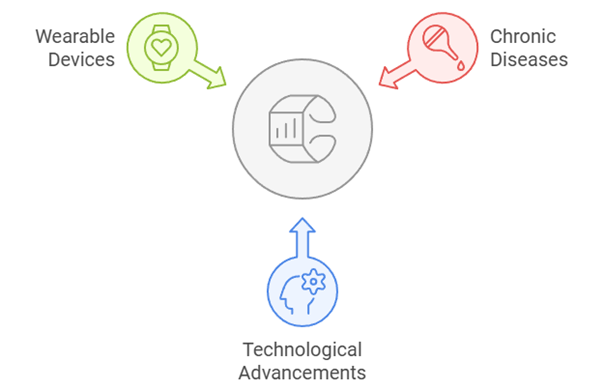
Figure 1. The biosensors market is rapidly growing, driven by advancements in technology, increasing healthcare needs like continuous glucose monitoring, and rising demand for wearable and point-of-care diagnostic devices.
Strategic Importance in Key Industries
Healthcare
Biosensors have become strategically crucial in the healthcare industry, revolutionizing patient care and diagnostics. In medical applications, biosensors enable rapid and accurate detection of various biomarkers, facilitating early disease diagnosis and personalized treatment approaches14. The integration of biosensors in wearable devices allows for continuous health monitoring, empowering patients to take a more active role in managing their health.
The COVID-19 pandemic has further underscored the importance of biosensors in healthcare, particularly in the development of rapid diagnostic tests. This has accelerated research and investment in biosensor technologies for infectious disease detection13.
Internet of Things (IoT)
The convergence of biosensors with IoT technologies is creating new opportunities for data-driven healthcare and environmental monitoring. IoT-enabled biosensors facilitate real-time data collection and analysis, enabling more efficient and proactive approaches to health management and environmental protection14. This integration is particularly valuable in remote patient monitoring and smart city applications.
Environmental Monitoring
Biosensors are playing an increasingly important role in environmental monitoring, offering rapid, sensitive, and cost-effective solutions for detecting pollutants and assessing environmental quality. Applications include monitoring water and air quality, detecting pesticides and toxins, and assessing soil health15. The agriculture segment of the biosensor market is expected to register the fastest CAGR of 9.1% from 2024 to 2030, indicating significant growth potential in environmental and agricultural applications17. Biosensors’ ability to provide real-time data on environmental conditions aligns with global efforts to achieve sustainable development goals, particularly in areas such as clean water and climate action17.
Other Industries
Beyond healthcare and environmental monitoring, biosensors are finding strategic applications in various other industries. In the food and beverage sector, biosensors are crucial for ensuring food safety by detecting contaminants and pathogens14. In industrial processes, biosensors enable more precise control and monitoring, contributing to improved efficiency and quality control.
The defense and security sector is also leveraging biosensor technologies for biodefense applications and threat detection18. This diversification of applications across multiple industries underscores the versatility and strategic importance of biosensor technologies.
The biosensors market presents significant investment opportunities driven by technological advancements, increasing healthcare needs, and expanding applications across various industries. As the market continues to evolve, strategic investments in research and development, particularly in areas such as wearable technologies, IoT integration, and environmental applications, are likely to yield substantial returns. The growing strategic importance of biosensors in healthcare, environmental monitoring, and other sectors positions this technology as a key driver of innovation and improvement in quality of life across multiple domains.
Strategic Importance of Biosensors
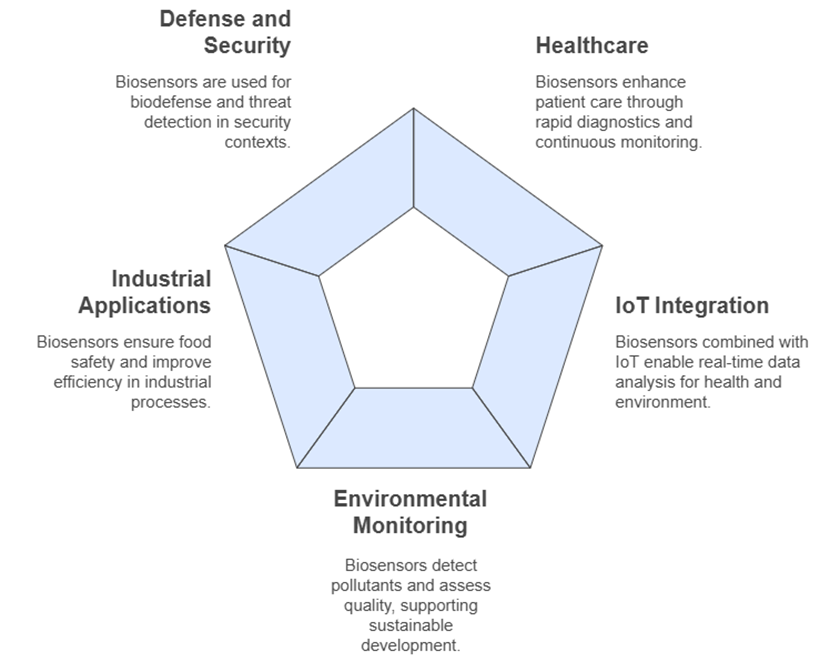
Figure 2. Biosensors are strategically vital across industries, particularly in healthcare, IoT-enabled applications, and environmental monitoring, driving innovation, real-time data analysis, and sustainable solutions with significant investment potential and transformative impacts on quality of life.
Market Analysis
Current Market Trends
The biosensors market is experiencing significant growth and diversification across various applications and regions. In healthcare, biosensors are revolutionizing patient care through continuous glucose monitoring, rapid diagnostics, and wearable health devices4,7. The blood glucose testing segment alone held a 42% market share in 2023, highlighting the dominance of diabetes management in the biosensor market4. Beyond healthcare, biosensors are making inroads into agriculture, environmental monitoring, food safety, and industrial processes2. This diversification is driven by the unique capabilities of biosensors to provide real-time, accurate, and cost-effective monitoring solutions across these sectors.
Regionally, the market shows varied dynamics. North America, particularly the United States, continues to lead with a significant market share, generating $9.5 billion in revenue in 20234. However, the Asia-Pacific region is emerging as a rapidly growing market, driven by increasing healthcare expenditure, technological advancements, and a rising prevalence of chronic diseases4. Europe, especially the UK, is also poised for substantial growth in the coming years, fueled by investments in research and development and a strong focus on healthcare innovation4.
Growth Drivers
Technological advancements are at the forefront of driving biosensor market growth. Miniaturization and nanotechnology have enabled the development of more sensitive, specific, and portable biosensors5. For instance, the integration of nanomaterials such as nanoparticles, nanowires, and carbon nanotubes has significantly enhanced biosensor performance, allowing for detection of analytes at extremely low concentrations5. This has opened up new possibilities in early disease detection and environmental monitoring.
The increased demand for point-of-care diagnostics is another major growth driver. The COVID-19 pandemic has accelerated this trend, highlighting the need for rapid, accurate, and decentralized testing capabilities3. Biosensors are well-positioned to meet this demand, offering quick results without the need for complex laboratory equipment. This is evidenced by the projected growth of the point-of-care testing segment, which is expected to reach $29.8 billion by 20324.
The expansion of wearable health monitoring devices represents a significant opportunity for biosensor technology. Companies like Biolinq are developing innovative wearable patches that can continuously monitor glucose levels and activity, providing valuable data for managing metabolic health1,7. This trend is supported by advancements in electrochemical sensor technology, which dominated the market with $12.5 billion in revenue in 20234.
Key Challenges
Despite the promising growth prospects, the biosensor market faces several challenges. Regulatory hurdles remain a significant obstacle, particularly for novel biosensor technologies entering the healthcare market. Companies must navigate complex approval processes, which can be time-consuming and costly. For example, Biolinq is currently working towards completing a U.S. pivotal clinical trial and subsequent FDA submission for their glucose sensor technology1.
Scalability and cost constraints pose another challenge, particularly for startups and emerging technologies. While there have been significant investments in the sector, with companies like Biolinq raising $58 million and Allez Health securing $60 million in funding1,6, scaling production while maintaining cost-effectiveness remains a hurdle. This is particularly crucial for technologies aimed at the consumer market, where price sensitivity can significantly impact adoption rates.
Competition from established players in the medical device and diagnostics industry presents a formidable challenge for new entrants. Companies like Abbott, Roche, and LifeSensors have invested billions in R&D, with Abbott spending $2.42 billion and Roche investing over $13 billion in 2020 alone3. This level of investment creates high barriers to entry and necessitates significant funding and strategic partnerships for emerging biosensor companies to compete effectively.
Overall, the biosensor market presents substantial opportunities for investment, driven by technological advancements, increasing demand for point-of-care diagnostics, and the expansion of wearable health monitoring devices. However, investors must carefully consider the regulatory landscape, scalability challenges, and competitive dynamics when formulating their investment strategies in this rapidly evolving sector.
Biosensor Market Dynamics
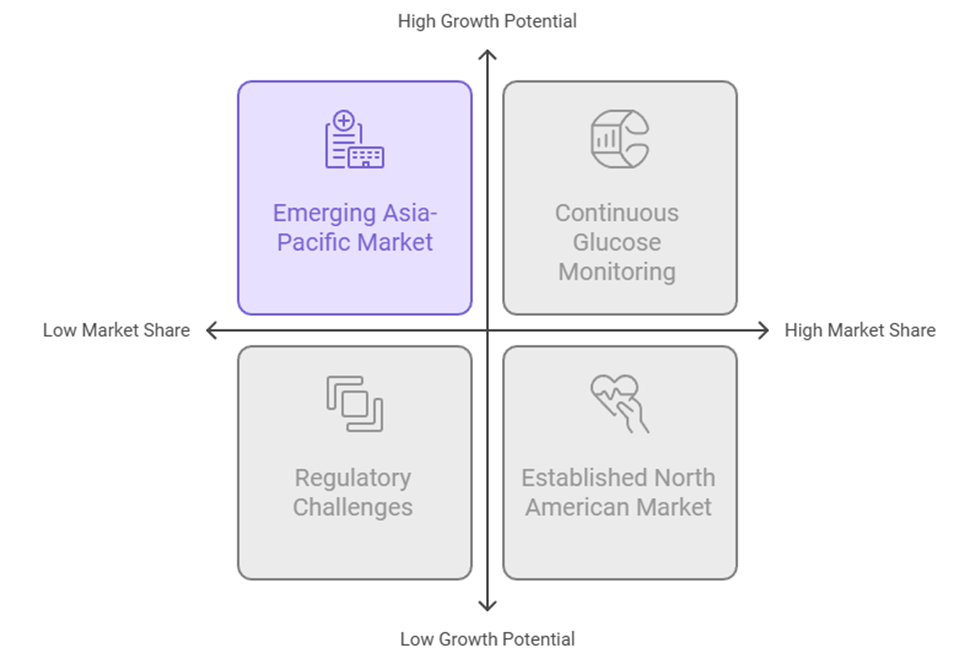
Figure 3. The biosensors market is rapidly growing and diversifying, driven by technological advancements, increasing demand for point-of-care diagnostics and wearable health monitoring, and regional growth in Asia-Pacific, but faces challenges like regulatory hurdles, scalability, and competition from established players.
Technology Landscape
The biosensor technology landscape is rapidly evolving, offering a diverse array of innovative solutions across multiple industries. This section explores the various categories of biosensors, recent innovations in their development, and emerging applications that are shaping the future of this dynamic field.
Categories of Biosensors
Biosensors can be broadly categorized into four main types: electrochemical, optical, piezoelectric, and thermal biosensors. Electrochemical biosensors, which dominated the market with $12.5 billion in revenue in 2023, utilize electrical signals for detection and are widely applied in medical diagnostics8. These sensors offer high sensitivity and are particularly useful in glucose monitoring and drug discovery applications.
Optical biosensors leverage light-based technologies for detection, proving valuable in various analytical applications10. These sensors are particularly effective in environmental monitoring and food safety testing due to their ability to detect minute changes in light properties when interacting with target analytes.
Piezoelectric biosensors, based on the piezoelectric effect, are highly sensitive to mass changes on their surface. This makes them ideal for detecting small molecules and biomolecules in applications such as environmental monitoring and biodefense10. Thermal biosensors, which rely on temperature changes for detection, find applications in temperature-sensitive environments10. These sensors are particularly useful in industrial processes and environmental monitoring where temperature fluctuations can indicate critical changes in the system.
Innovations in Biosensor Development
Recent innovations in biosensor development have focused on creating non-invasive and minimally invasive technologies. Companies like Biolinq are developing wearable patches for continuous glucose monitoring, eliminating the need for traditional invasive methods8. This trend towards non-invasive biosensing is driven by the demand for pain-free, real-time monitoring solutions that can be easily integrated into daily life.
The integration of biosensors with AI, IoT, and cloud platforms is revolutionizing data collection and analysis. IoT-enabled biosensors are becoming increasingly prevalent, allowing for real-time data transmission and analysis10. This connectivity enables continuous monitoring and early detection of health issues, enhancing preventive care and personalized medicine approaches.
Novel bioreceptor elements are also at the forefront of biosensor innovation. Aptamers, which are synthetic single-stranded DNA or RNA molecules, are being used as highly specific and stable alternatives to traditional antibodies in biosensor design11. CRISPR-based biosensors are emerging as powerful tools for rapid and sensitive detection of specific DNA or RNA sequences, opening new possibilities in diagnostics and environmental monitoring.
Emerging Applications
The field of personalized medicine and digital health is witnessing significant advancements through biosensor technology. Wearable biosensors are enabling continuous monitoring of vital signs and biomarkers, providing a comprehensive view of an individual’s health status9. This real-time data collection facilitates early detection of anomalies and allows for more targeted and effective treatment strategies.
Environmental and food monitoring applications are expanding rapidly. Bacterial whole-cell biosensors are being developed to detect toxins in the environment and monitor nutrient levels in soils, informing crop management strategies12. In the food industry, biosensors are crucial for ensuring food safety by detecting contaminants and pathogens quickly and accurately.
Industrial automation and precision agriculture are benefiting from the integration of biosensor technologies. In agriculture, biosensors are being used to monitor soil health, crop conditions, and pest infestations, enabling more precise and efficient farming practices8. The agriculture segment of the biosensor market is expected to register the fastest CAGR of 9.1% from 2024 to 2030, indicating significant growth potential in this area.
In all, the biosensor technology landscape is characterized by rapid innovation and diversification. The convergence of biosensors with other cutting-edge technologies like AI and IoT is opening new frontiers in healthcare, environmental monitoring, and industrial applications. As these technologies continue to evolve, they present exciting opportunities for investment and development in the biosensor market.
Technology Landscape
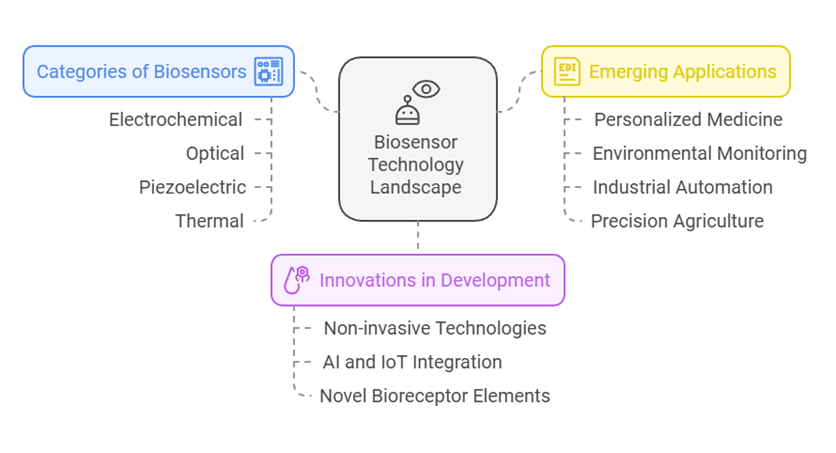
Figure 4. The biosensor technology landscape is rapidly evolving, with advancements in non-invasive methods, integration with AI and IoT, and applications across healthcare, environmental monitoring, and industrial sectors driving innovation, diversification, and significant investment opportunities.