


Investment Strategies in Emerging Biosensor Technologies (II/IV)
The biosensor market offers substantial investment opportunities, particularly in wearable, implantable, and non-invasive glucose monitoring technologies, as well as multiplexed biosensing platforms. However, investors must navigate risks such as market competition, technological obsolescence, and regulatory challenges. By adopting a diversified investment approach, collaborating with regulatory experts, and forming strategic partnerships with academia and industry, investors can mitigate these risks and capitalize on the market’s growth potential, particularly in emerging markets and innovation hubs

Investment Opportunities
The biosensor market is experiencing rapid growth, with projections indicating a valuation of $63 billion by 2032, growing at a CAGR of 9% from 2022 to 20325. This substantial growth presents numerous investment opportunities across various segments of the biosensor industry.
High-Growth Segments
Wearable and Implantable Devices
Wearable and implantable biosensors represent a significant high-growth segment in the biosensor market. These devices offer continuous, real-time monitoring of physiological parameters, enabling proactive healthcare interventions and personalized medicine approaches2. Wearable biosensors, integrated into clothing or accessories, provide non-intrusive data collection on vital signs, activity levels, and even biochemical markers2. Companies like Biolinq are at the forefront of this technology, developing wearable patches that combine glucose monitoring with activity tracking1,4.
Implantable biosensors, while more invasive, offer focused, in-depth information on specific parameters. The synergy between wearable and implantable biosensors contributes to a holistic approach to precision medicine, enhancing diagnostics and treatment outcomes2.
Investors should consider companies developing innovative materials and miniaturization technologies for these devices, as well as those focusing on data integration and analysis platforms.
Non-Invasive Glucose Monitoring
Non-invasive glucose monitoring represents a particularly lucrative investment opportunity within the biosensor market. With diabetes affecting millions worldwide, there is a strong demand for painless, convenient glucose monitoring solutions. Biolinq’s intradermal glucose sensor, which uses an array of tiny electrochemical sensors to measure glucose levels just beneath the skin’s surface, exemplifies the innovation in this space1. This technology not only improves user experience but also has the potential to increase adherence to monitoring regimens, ultimately leading to better health outcomes.
Investors should look for companies developing novel approaches to non-invasive glucose monitoring, such as those utilizing optical, electromagnetic, or other cutting-edge technologies. Additionally, companies working on integrating glucose monitoring with other health parameters in a single device could offer significant value propositions.
Multiplexed Biosensing Platforms
Multiplexed biosensing platforms, capable of detecting multiple analytes simultaneously, represent another high-growth segment. These platforms offer the potential for more comprehensive health monitoring and diagnostics. Biolinq’s technology, for instance, is designed with multi-analyte capabilities in mind1. Such platforms can provide a more holistic view of an individual’s health status, enabling more accurate diagnoses and personalized treatment plans.
Investors should consider companies developing innovative sensor arrays, advanced data processing algorithms, and integration technologies that enable the simultaneous detection and analysis of multiple biomarkers. Platforms that can be easily adapted to detect different sets of analytes for various applications (e.g., metabolic health, cardiovascular health, infectious diseases) may offer particularly attractive investment opportunities.
Geographical Opportunities
High-Potential Regions: Asia-Pacific and Emerging Markets
The Asia-Pacific region and other emerging markets present significant growth opportunities for biosensor technologies. These regions are experiencing rapid economic growth, increasing healthcare expenditure, and rising awareness of preventive healthcare. For instance, Osang Healthcare Co., Ltd., a Korean in-vitro diagnostics company, recently led a $60 million investment in Allez Health, demonstrating the growing interest in biosensor technologies in the Asia-Pacific region3.
Investors should consider companies targeting these high-growth markets, either through direct operations or strategic partnerships with local entities. Factors such as large population bases, increasing prevalence of chronic diseases, and improving healthcare infrastructure make these regions particularly attractive for biosensor technology deployment.
Regional Innovation Hubs
Innovation hubs such as Silicon Valley in the United States and Shenzhen in China continue to play crucial roles in biosensor technology development. These hubs offer rich ecosystems of talent, research institutions, and funding sources that can accelerate innovation and commercialization. For example, Biolinq, based in San Diego (part of the broader Southern California biotech hub), has successfully raised significant funding for its biosensor technology1.
Investors should pay close attention to startups and companies emerging from these innovation hubs, as they often benefit from access to cutting-edge research, experienced talent pools, and established networks of mentors and collaborators. Additionally, consider companies that are strategically positioned to leverage the strengths of multiple innovation hubs through partnerships or distributed research and development efforts.
Startups and Early-Stage Companies
Identifying Promising Startups
The biosensor field is rich with innovative startups and early-stage companies developing novel technologies. When identifying promising startups, investors should consider factors such as the uniqueness and potential impact of the technology, the strength of the intellectual property portfolio, and the experience and track record of the founding team. For instance, Allez Health (formerly Zense-Life) has demonstrated significant progress with seven issued patents, over 40 pending patent applications, and extensive clinical studies involving more than 1,500 users3.
Look for startups that are addressing clear unmet needs in the healthcare or environmental monitoring sectors. Companies developing technologies that offer substantial improvements in sensitivity, specificity, ease of use, or cost-effectiveness compared to existing solutions are particularly worth considering.
Assessing Technology Readiness Levels (TRLs) and Commercialization Potential
When evaluating early-stage biosensor companies, it’s crucial to assess their technology readiness levels (TRLs) and commercialization potential. Consider the stage of development, from proof-of-concept to clinical trials and regulatory approvals. Biolinq, for example, is preparing for a U.S. pivotal clinical trial and subsequent FDA submission, indicating a relatively advanced stage of development1.
Evaluate the regulatory landscape for the specific biosensor technology and the company’s strategy for navigating regulatory requirements. Companies with clear pathways to regulatory approval and well-defined commercialization strategies may present lower-risk investment opportunities.
Additionally, consider the potential market size, competitive landscape, and the company’s go-to-market strategy. Look for startups with strong partnerships or collaborations with established healthcare providers, research institutions, or larger companies in the medical device or diagnostics sectors, as these relationships can significantly accelerate commercialization efforts.
In all, the biosensor market offers diverse and promising investment opportunities across various segments and geographical regions. By carefully evaluating high-growth areas, geographical opportunities, and promising startups, investors can position themselves to capitalize on the rapid advancements in biosensor technologies and their increasing adoption in healthcare, environmental monitoring, and other sectors.
Biosensor Market Investment Opportunities
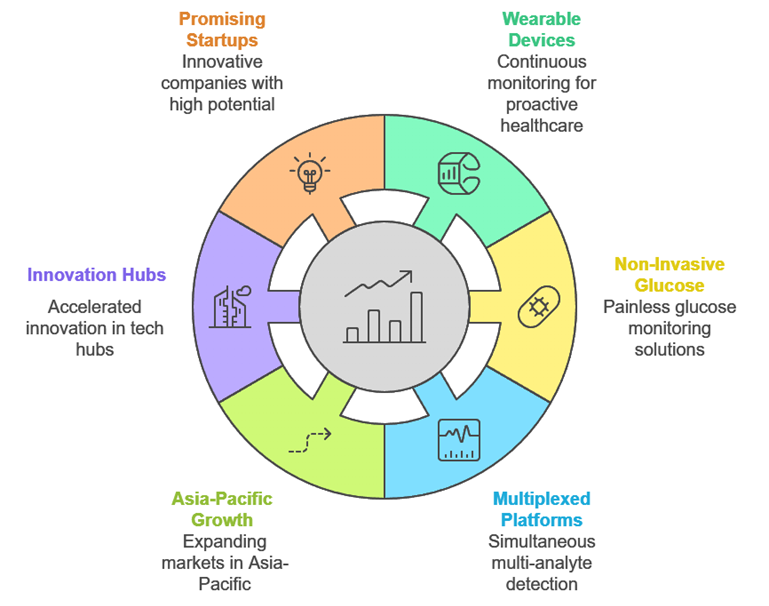
Figure 5. The biosensor market presents significant investment opportunities, driven by high-growth segments such as wearable and implantable devices, non-invasive glucose monitoring, and multiplexed biosensing platforms, with promising prospects in emerging markets and innovation hubs.
Risk Assessment and Mitigation
Investing in emerging biosensor technologies presents significant opportunities, but it also comes with inherent risks that must be carefully assessed and mitigated. A comprehensive understanding of these risks is crucial for developing effective investment strategies in this rapidly evolving field.
Market Risks
Competition and Market Saturation
The biosensor market is experiencing rapid growth, with projections indicating a valuation of $36.55 billion by 2029, growing at a CAGR of 8.67%7. This growth attracts numerous players, leading to increased competition and potential market saturation. Established companies and startups alike are vying for market share, which can lead to price pressures and reduced profit margins.
To mitigate this risk, investors should focus on companies with unique value propositions, strong intellectual property portfolios, and clear competitive advantages. For instance, companies developing novel biosensor technologies that address unmet needs or offer significant improvements over existing solutions are more likely to succeed in a crowded market. Additionally, investors should consider companies with diversified product portfolios or those targeting niche applications where competition may be less intense.
Technological Obsolescence
The rapid pace of technological advancement in the biosensor field presents a significant risk of obsolescence. New technologies can quickly render existing products or platforms outdated, potentially leading to significant losses for investors.
To mitigate this risk, investors should prioritize companies with robust research and development pipelines and a demonstrated ability to innovate continuously. Companies that actively collaborate with academic institutions or participate in industry consortia are often better positioned to stay at the forefront of technological advancements. Additionally, investors should look for companies with flexible technology platforms that can be adapted to incorporate new discoveries or address emerging market needs.
Regulatory and Compliance Risks
FDA, CE Mark, and ISO Standards
The biosensor industry is subject to stringent regulatory requirements, particularly in healthcare applications. Navigating the complex landscape of FDA approvals, CE marking, and ISO standards can be challenging and time-consuming. Approximately 25% of medical devices submitted for FDA approval are denied each year, underscoring the importance of regulatory compliance8.
To mitigate regulatory risks, investors should prioritize companies with experienced regulatory teams and a track record of successful regulatory submissions. Companies that engage early with regulatory bodies and incorporate regulatory considerations into their product development process are more likely to achieve timely approvals. Additionally, investors should consider the regulatory landscape in different geographic markets, as requirements can vary significantly between regions.
Intellectual Property Challenges
The biosensor field is characterized by intense competition for intellectual property rights. Patent disputes and challenges can lead to significant legal costs and potentially limit a company’s ability to commercialize its technology.
To mitigate intellectual property risks, investors should conduct thorough due diligence on a company’s patent portfolio and freedom to operate. Companies with strong, defensible patents and a clear IP strategy are better positioned to navigate potential challenges. Additionally, investors should consider companies that actively monitor the IP landscape and have strategies in place to address potential infringement issues.
Risk Assessment and Mitigation in Biosensor Technology Investments
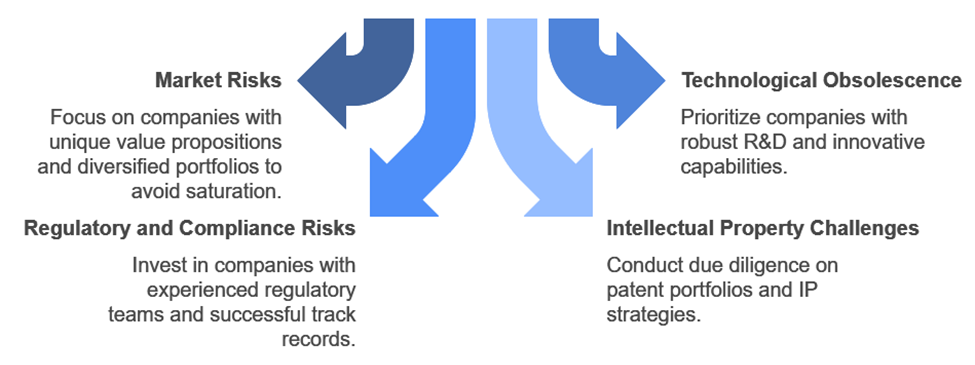
Figure 6. Investing in emerging biosensor technologies offers significant opportunities but also involves risks such as market competition, technological obsolescence, regulatory hurdles, and intellectual property challenges, which can be mitigated through careful evaluation and strategic investment in companies with strong IP, R&D, and regulatory expertise.
Mitigation Strategies
Diversified Investment Portfolio
One of the most effective strategies for mitigating risks in the biosensor market is to maintain a diversified investment portfolio. This approach involves spreading investments across different types of biosensor technologies, application areas, and stages of company development. By diversifying, investors can reduce their exposure to any single technology or market segment.
For example, an investor might allocate funds to companies developing wearable biosensors, implantable devices, and lab-on-a-chip technologies. Additionally, they might invest in both early-stage startups with promising technologies and more established companies with proven track records. This diversification helps to balance the high-risk, high-reward potential of emerging technologies with the stability of more mature companies.
Collaboration with Regulatory Experts
Given the complex regulatory landscape in the biosensor industry, collaboration with regulatory experts is crucial for mitigating compliance risks. Investors should encourage portfolio companies to engage with regulatory consultants or build in-house regulatory expertise early in the product development process.
These experts can provide valuable guidance on regulatory pathways, help design clinical trials that meet regulatory requirements, and assist in preparing comprehensive regulatory submissions. By prioritizing regulatory compliance from the outset, companies can reduce the risk of costly delays or rejections during the approval process.
Strategic Partnerships with Academia and Industry
Fostering strategic partnerships between biosensor companies, academic institutions, and industry leaders can be an effective risk mitigation strategy. These collaborations can provide access to cutting-edge research, specialized expertise, and valuable resources.
Academic partnerships can help companies stay at the forefront of technological advancements and potentially identify new applications for their technologies. Industry partnerships, on the other hand, can provide valuable insights into market needs, manufacturing processes, and distribution channels. For example, a startup developing a novel glucose monitoring technology might partner with a leading diabetes care company to leverage their market expertise and distribution network.
Overall, while the biosensor market offers significant investment opportunities, it also presents various risks that must be carefully managed. By implementing a diversified investment approach, prioritizing regulatory compliance, and fostering strategic partnerships, investors can mitigate these risks and position themselves to capitalize on the growth potential of emerging biosensor technologies. As the market continues to evolve, staying informed about technological advancements, regulatory changes, and market trends will be crucial for successful investment strategies in this dynamic field6,9,10.
Mitigation Strategies in Biosensor Market
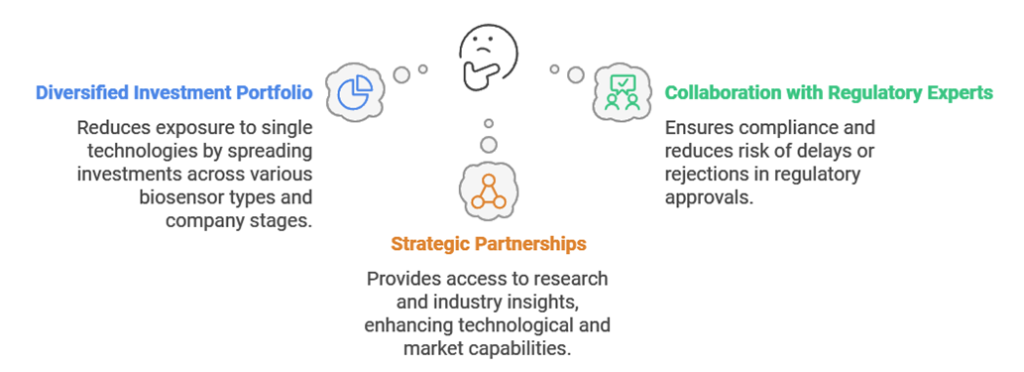
Figure 7. To mitigate risks in the biosensor market, investors should adopt a diversified investment portfolio, collaborate with regulatory experts, and foster strategic partnerships with academia and industry to balance potential rewards with stability.