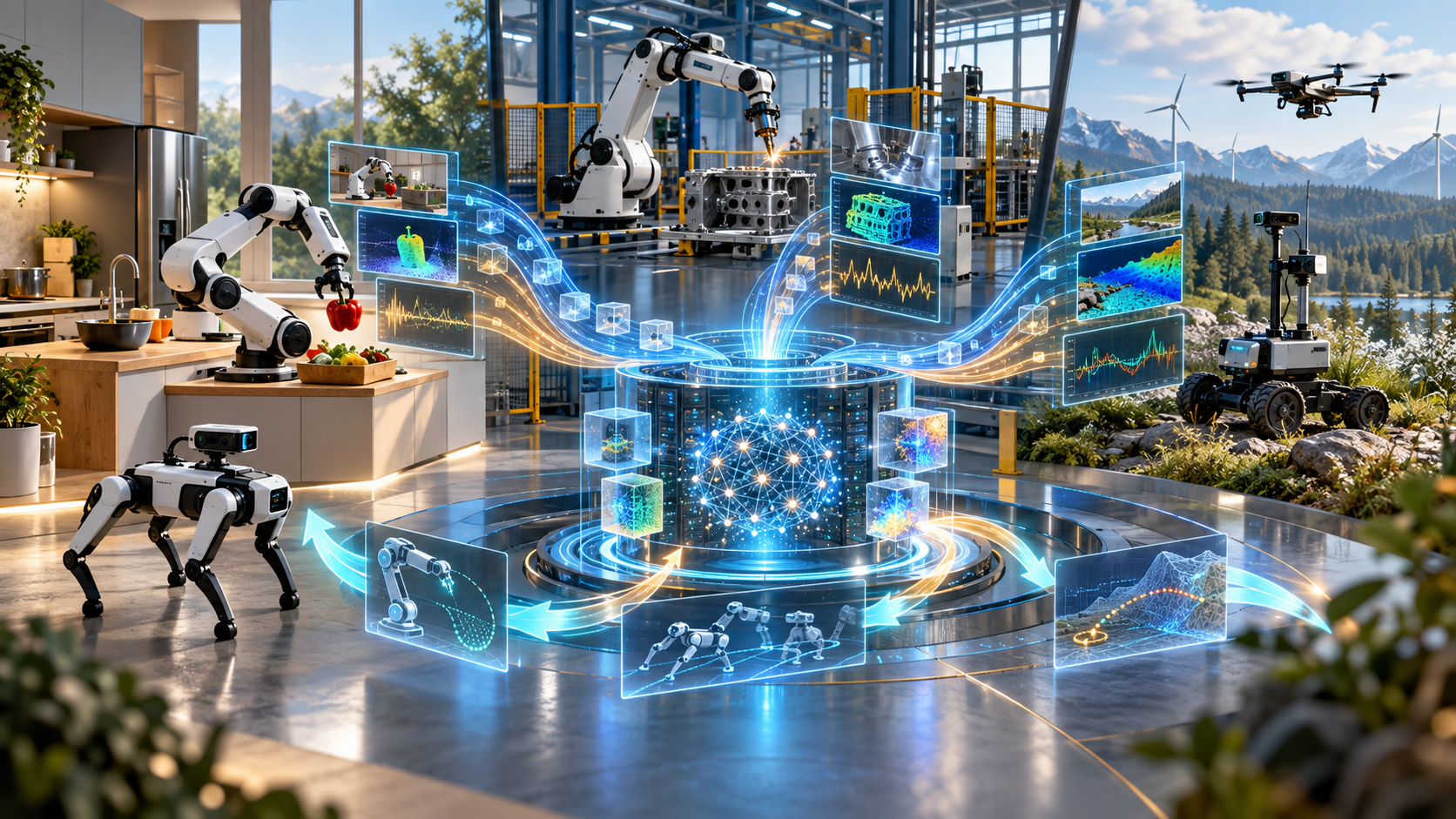
Robot Data Factories: The Missing Infrastructure for Physical AI Physical AI may be constrained less by model size than by the supply of validated robot experience. A new infrastructure concept—the...

Anthropic’s Model Hardware Standard could reduce the cost of connecting AI agents to laboratory and industrial equipment. Early pilots are promising, but safety, conformance and integration with...

AI infrastructure is becoming a constraint-stack problem: a finished GPU die is not deployable compute until enough high-bandwidth memory is available, qualified and integrated through advanced...

Europa brings Axelera's edge-first inference architecture to server cards. Its commercial test is whether system-level performance and software portability match the silicon promise...

Part II examines why U.S. semiconductor onshoring can stall after a fab is announced: milestone funding, skilled labor, packaging, yield, utilities and demand. It maps evidence-backed remedies and the...

The United States’ strategic push towards onshoring semiconductor manufacturing—driven by substantial federal incentives, tariff policies, public-private partnerships, infrastructure...

The convergence of hybrid energy harvesting, AI-optimized MEMS sensors, and ultra-low-power neuromorphic computing is redefining the future of wearable technology, enabling battery-free, autonomous...

The fusion of advanced nanomaterials with AI-driven energy management is catalyzing a new generation of energy-autonomous wearable devices and MEMS sensors. By leveraging innovations like auxetic...

The evolving regulatory landscape and sustainability mandates in the wearable technology sector are driving innovation and investment in ultra-low-power architectures, sustainable materials, and...

The convergence of alternative energy sources, wearables, MEMS sensors, and AI is driving transformative change across industries such as healthcare, industrial IoT, and consumer electronics, creating...
Robot Data Factories: The Missing Infrastructure for Physical AI Physical AI may be constrained less by model size than by the supply of validated robot experience. A new infrastructure concept—the...
Anthropic’s Model Hardware Standard could reduce the cost of connecting AI agents to laboratory and industrial equipment. Early pilots are promising, but safety, conformance and integration with...
AI infrastructure is becoming a constraint-stack problem: a finished GPU die is not deployable compute until enough high-bandwidth memory is available, qualified and integrated through advanced...
Europa brings Axelera's edge-first inference architecture to server cards. Its commercial test is whether system-level performance and software portability match the silicon promise...
Part II examines why U.S. semiconductor onshoring can stall after a fab is announced: milestone funding, skilled labor, packaging, yield, utilities and demand. It maps evidence-backed remedies and the...
The United States’ strategic push towards onshoring semiconductor manufacturing—driven by substantial federal incentives, tariff policies, public-private partnerships, infrastructure...
The convergence of hybrid energy harvesting, AI-optimized MEMS sensors, and ultra-low-power neuromorphic computing is redefining the future of wearable technology, enabling battery-free, autonomous...
The fusion of advanced nanomaterials with AI-driven energy management is catalyzing a new generation of energy-autonomous wearable devices and MEMS sensors. By leveraging innovations like auxetic...
The evolving regulatory landscape and sustainability mandates in the wearable technology sector are driving innovation and investment in ultra-low-power architectures, sustainable materials, and...
The convergence of alternative energy sources, wearables, MEMS sensors, and AI is driving transformative change across industries such as healthcare, industrial IoT, and consumer electronics, creating...